Why Performance Artists Need Websites More Than Social Media
Most performance artists pour their creative passion into Instagram reels and Facebook posts, hoping the algorithm notices. Sometimes it does. Plenty of times, it just doesn’t.
But social media was never built to run your bookings. It was built to keep people scrolling. Posts get buried within hours, audiences drift between platforms, and the rules shift without warning.
So what’s the real difference between an artist’s website and social media? This article covers what each one actually does for your career, where the strengths and limitations lie, and how the two work best together.
Artist Website vs Social Media: What Actually Puts Bookings in Your Calendar
Booking work as a performer takes more than great content. It takes a professional setup that makes people trust you before they even reach out.
Here is where the two approaches split:
You Don’t Own Your Social Media Audience
Your follower count means nothing if the platform shuts down, suspends your account, or buries your posts in a feed nobody scrolls. A dedicated following built on someone else’s platform is borrowed ground.
One policy change and your audience connection disappears overnight. Ask any performer who built their fanbase on Vine back in 2016. When the platform shut down, years of audience-building vanished with it. The same risk sits behind every social profile today.
Algorithms Change, Your Website Doesn’t
Social media platforms update their algorithms constantly. What worked for your posts last month may do nothing for you today. Your website, by contrast, sits at the same address, holds the same content, and keeps showing up in search engines regardless of any platform update.
A performer based in Fortitude Valley who published a services page two years ago still ranks for local booking searches today. That page has not moved, changed, or disappeared. It just keeps working. Search engines reward pages that stay active and relevant over time, and a website gives you that stability in a way social media simply cannot.
Professional Online Presence Signals You Mean Business
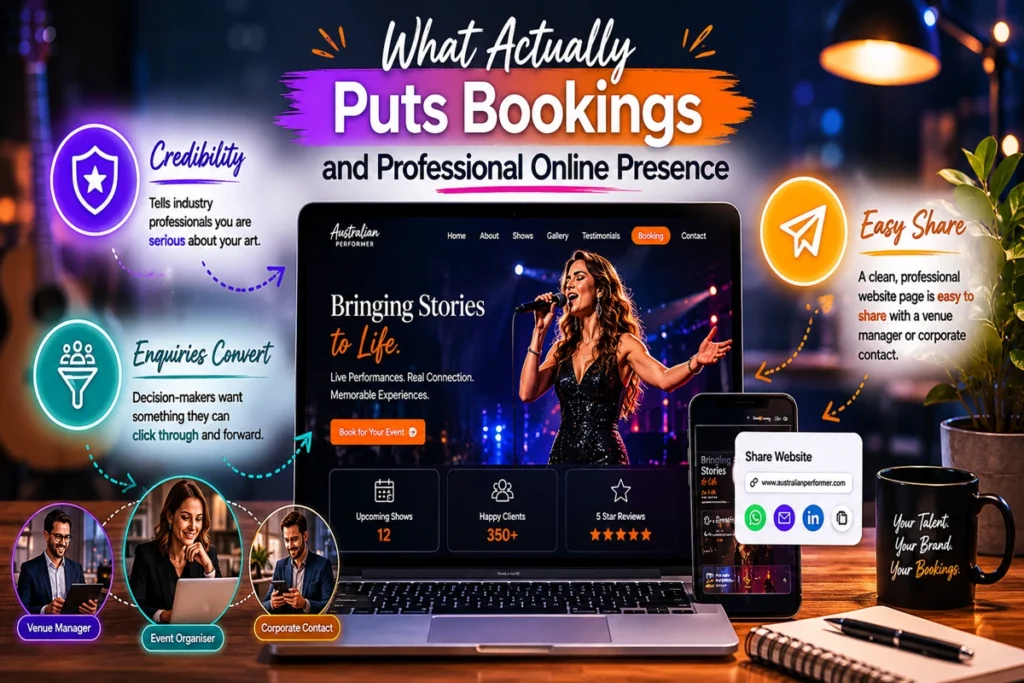
Three things happen when an event organiser finds your website instead of your Instagram profile:
- Credibility Is Established Immediately: A well-built website tells industry professionals you are serious about your craft before a single conversation starts. Social profiles can look polished, but they rarely signal the same level of commitment.
- Enquiries Convert More Often: In our experience, performers with a dedicated bookings page convert enquiries into paid work far more often than those sending people to a social profile. Decision-makers want something they can click through and forward.
- Clients Have Something to Share: Potential clients often need to pass your details up the chain. A clean, professional website page is easy to share with a venue manager or corporate contact. A social profile rarely cuts it at that level.
A website doesn’t just represent you online. It actively works to close bookings on your behalf.
What Your Website Can Do That Social Platforms Simply Can’t
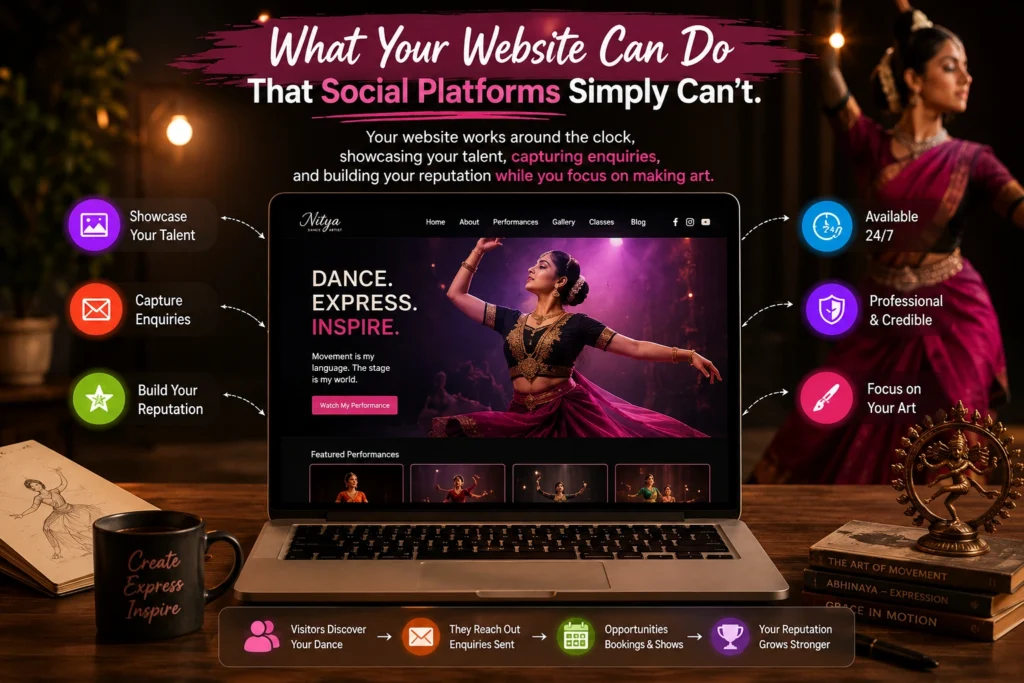
Your website works around the clock, showcasing your talent, capturing enquiries, and building your reputation while you focus on making art.
Let’s find out what that looks like in practice:
- Online Portfolio at Your Fingertips: A well-organised online portfolio lets potential buyers browse your work at their own pace, without distractions from other creators or sponsored posts.
- Search Visibility That Stacks Up: Every blog post, bio page, and service listing on your own website adds to your search ranking over time. Social posts simply don’t do that.
- Direct Booking and Sales Tools: Your website can hold a booking form, a shop, and a contact page all in one spot. That kind of setup keeps potential clients moving toward a decision.
- Space to Share Your Process: A website gives you space to share tutorials, behind-the-scenes stories, and project updates that build trust with your target audience far beyond what a caption allows.
- Relevant Keywords Reach New Audiences: With the right relevant keywords in your content, search engines connect your work to people actively looking for performers in your area.
Each of these elements compounds over time. The longer your website is active and well-maintained, the harder it works to bring the right people to you.
Building a Fruitful Online Presence Beyond the Feed
A strong online presence has two jobs. The first is getting you found. The second is making sure what people find actually converts. The key is knowing which one to build on.
Aspects | Website | Social Media |
| Audience ownership | Full control | Platform-dependent |
| Discoverability | Search engines | Algorithm-driven |
| Community building | Blog, email list | Comments, shares |
| Collaboration tools | Portfolio, contact page | DMs, tags |
| Long-term growth | Compounds over time | Resets with trends |
Artists who tap into both channels build a thriving artistic community around their work. Your website anchors the relationship, while social media keeps it warm. Fellow artists, creatives, and potential fans all move between both spaces regularly.
In our experience, performers who network across the art world, rather than staying in one place, expand their reach far quicker. Collaboration, shared workshops, and cross-promotion with other artists all flow more naturally when your home base is a website people can actually visit and explore.
How an Artist Website Supports Your Artistic Journey Long-Term
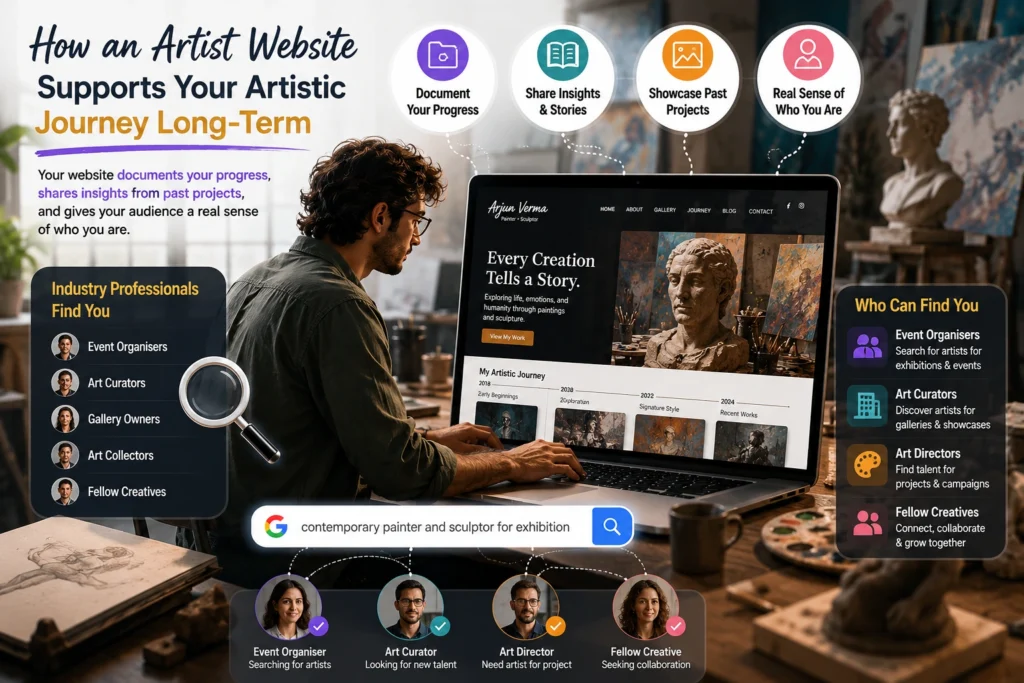
Your target audience can shift entirely from one year to the next. Add a new service page, update your portfolio, or build out a new performance niche as your creative process deepens. A social profile gives you a post. A website gives you a foundation.
You can document your progress, share valuable insights from past projects, and give your audience a real sense of who you are beyond the performance. That kind of depth builds genuine connection over time.
And when your unique voice comes through clearly on your website, it attracts the right people. Industry professionals, event organisers, and fellow creatives use search to find talent. They arrive with intent and are genuinely interested in your art business.
Ready to Stop Renting Space on the Internet?
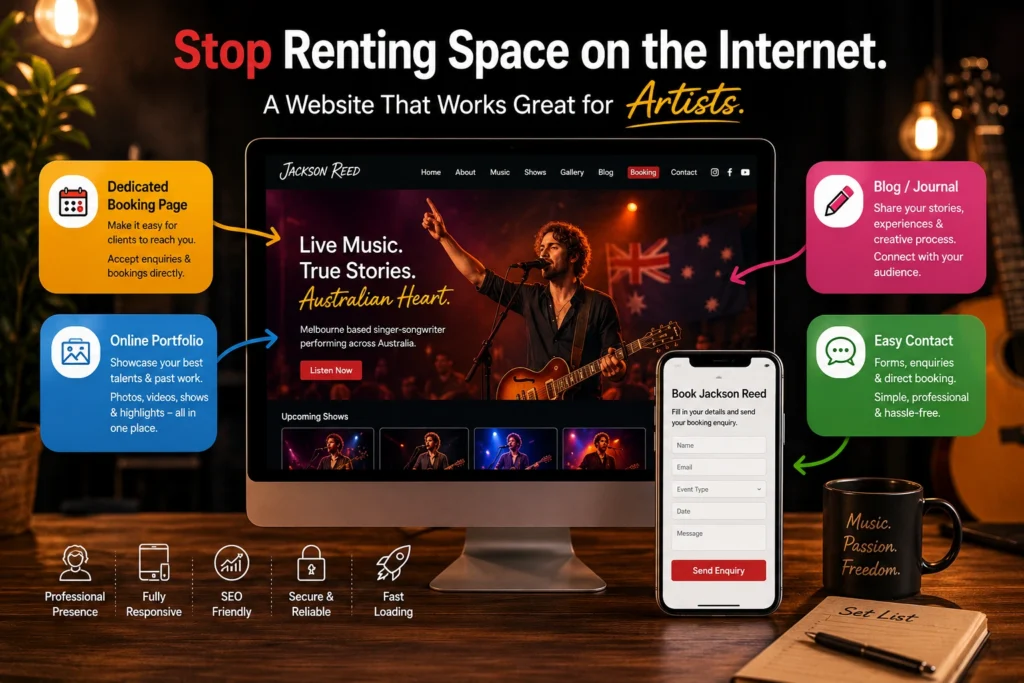
Social media is a great tool. But it is somebody else’s house, and you are just a tenant. Your website is the one online platform you actually own, and that changes everything about how you show up for potential clients and fans alike.
Here is what to focus on first:
- Set up a dedicated booking page that makes it easy for clients to reach you
- Build an online portfolio that showcases your best talents and past work
- Start a blog or journal to share your stories
The performers who stand out online are not always the ones with the biggest following. They are the ones with a clear message, a professional setup, and a home base that works for them every single day.
If you are ready to build that home base, the team at No Budget Performance can help you get there. Your next booking could come from a search engine, not a scroll. Visit nobudgetperformance.net to get started.
FAQs
Do I Need a Website If I’m Already Active on Social Media?
Yes. Social profiles are great for staying visible, but you do not own that space. A website gives you full control over how potential buyers and creators find and contact you on the internet.
What Should I Do After Buying a Domain?
Start by connecting it to a website builder such as Squarespace or WordPress. From there, set up your core pages: home, portfolio, about, and a booking contact form. Keep the structure simple to begin with and build it out as your needs grow.
How Often Should Artists Update Their Website?
Aim for once a month at minimum. Add new work to your online portfolio, refresh your bio, or post a short update. Search engines favour websites that stay active.
What Are the Best Social Media Management Tools for Artists?
Later, Buffer, and Hootsuite are all solid options for planning and scheduling posts across multiple platforms. Each one helps you stay consistent online without eating into your creative time.
What Is the Best Platform to Build a Website On?
Squarespace suits artists who want a clean, visual layout with minimal fuss. WordPress works well if you want more control over your content and SEO long-term. Not sure which one fits your setup? The team at No Budget Performance works with performance artists across Brisbane to build websites that actually bring in bookings.