Can a Small Exhibition Generate Global Attention Online?
Yes, a small exhibition can generate global attention online. Most performance artists don’t realise that, though, and so their exhibition marketing stops at the venue door. Your art can reach collectors, curators, and fans far beyond your local suburb.
We get it. Putting your work online can feel overwhelming, especially when you aren’t sure where to start. From what we’ve seen, that uncertainty is what holds most artists back from building a real-world audience.
To give you a clear path forward, this article covers how to find your target audience online and which exhibition marketing strategies pull real attention. After that, we’ll look at what other artists are doing right now to grow their reach.
Let’s get into it.
Small Exhibitions and the Online Opportunity
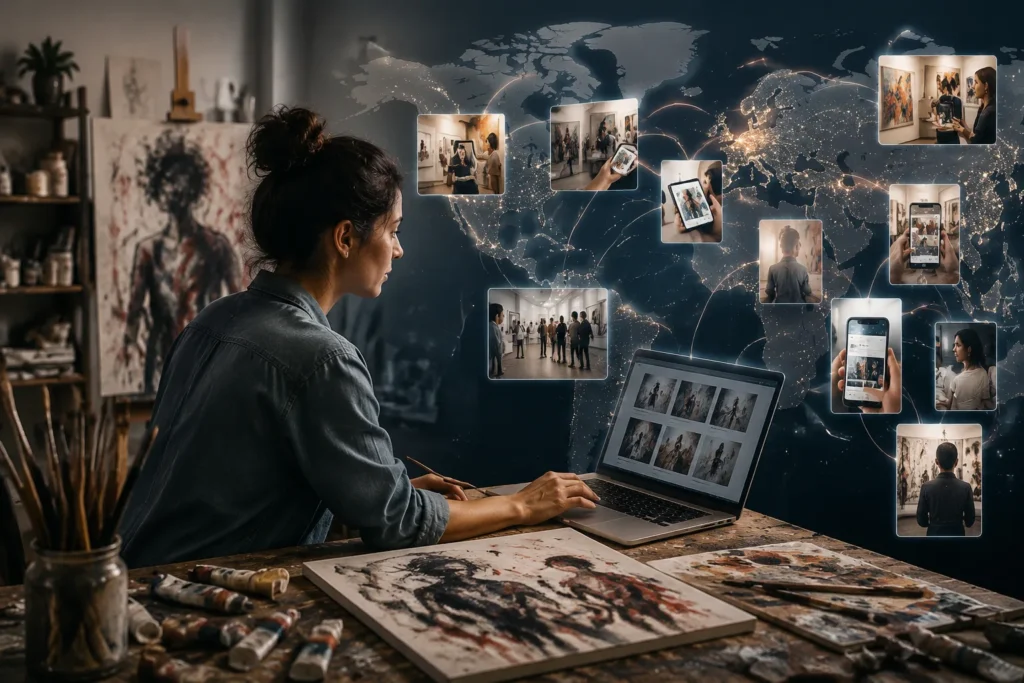
A well-promoted exhibition can put your art in front of audiences you’d never reach through foot traffic alone.
Digital channels let artists share their work with a worldwide audience instantly. For independent performers, that shift opens up opportunities for sales, collaborations, and new audiences across the globe. An exhibition without an online strategy, though, is like setting up a gallery in an empty field.
That’s why exhibition marketing deserves as much attention as the event itself (social media alone reaches over 5 billion users). And when you do give the attention, people see your artwork, share it, and remember it well beyond closing night.
In our experience, that visibility compounds across every exhibition and directly affects your sales, your brand, and your future reach.
Who Makes Up Your Target Audience Online
Your target audience online is probably not who you’d picture. Collectors, curators, students, and event planners are all out there searching for new artists, and your exhibition can show up right in front of them.
So let’s break that down by audience type and platform.
Who Follows Art Online and Why
Your online art audience includes hobbyists, serious collectors, academics, and working professionals (yes, even the “I don’t get art” crowd). Because most of them can’t always attend exhibitions in person, seeking that experience digitally makes sense.
According to recent research on digital arts engagement in Australia, that audience has grown sharply across all age groups.
Where Your Ideal Viewers Spend Time
So, where do these people spend their time online? For art audiences, it’s mainly Instagram, Pinterest, Facebook groups, and dedicated artist pages across the web. Each platform pulls different types of followers.
Instagram gets your work seen fast through posts, reels, and stories. That’s great for visibility, but Pinterest drives long-term traffic to your website, while Facebook groups attract serious buyers who want context and conversation.
The right platform for your art style saves you time, budget, and wasted marketing efforts.
Exhibition Marketing Strategies That Pull Real Attention
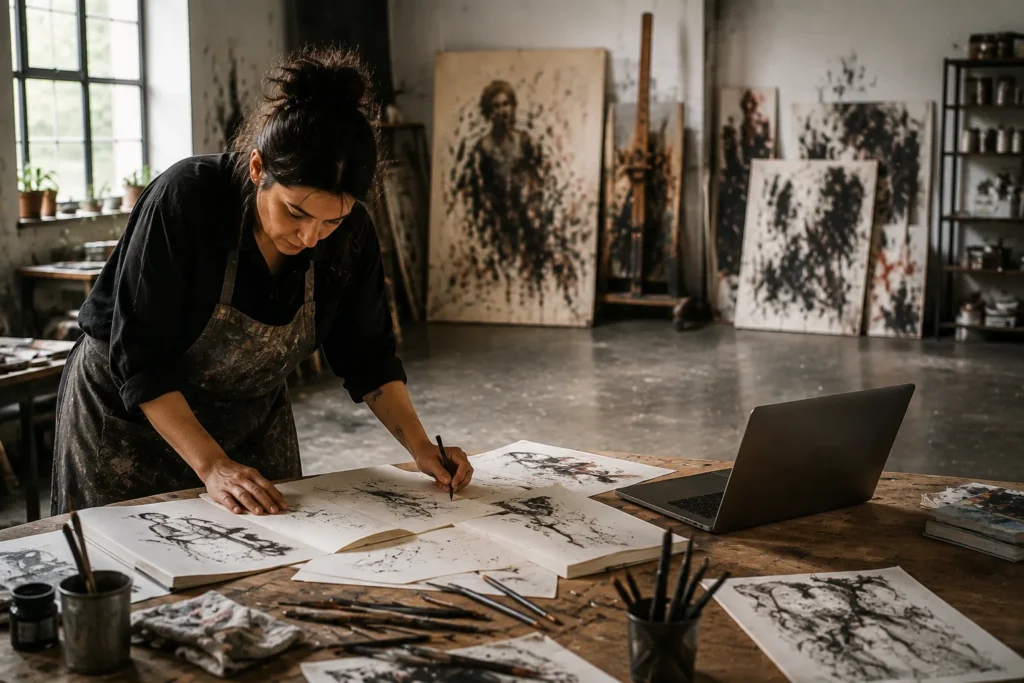
Some performance artists spend weeks preparing an exhibition and just a few hours promoting it online. In our experience, artists who nail their messaging early rarely struggle to attract visitors.
Start with these four: visual branding, image optimisation, interactive content, and lead generation.
- Consistent Visual Branding: Your Instagram posts, website pages, and event listings should all look and feel the same. When your message stays consistent, your audience trusts your work.
- Google-Optimised Images: Before uploading any image, add a descriptive file name, relevant alt text, and a short caption. Artists who understand how Google indexes and displays images pull in visitors from well outside their usual following.
- Interactive Elements: Live Q&As and behind-the-scenes reels give your audience a reason to engage before the event starts, especially if you’re launching a new product or series alongside your exhibition. And anticipation brings serious visitors through the door.
- Clear Lead Generation Tools: Add a simple sign-up form to your website and offer something in return, like early access to your next exhibition or a free behind-the-scenes look. That way, you build a real contact list to reach out to next time.
Even applying just two of these consistently will put your exhibition ahead of most.
What Other Artists Are Doing Right
A lot of artists are finally putting their best foot forward, and the results speak for themselves (the ones who don’t adapt disappear). Independent artists who grow fast tend to share these four habits:
- Promoting Before the Event: Two weeks before opening night, your audience should already know your exhibition exists. Build buzz early through Instagram stories and email lists, and you’ll walk into opening night with a warm crowd.
- Using Trade Shows Strategically: Trade shows connect you directly with galleries, buyers, and other artists in a way that builds your reputation fast within the industry. And honestly, a few posts, reels, and stories extend that credibility to audiences who couldn’t attend in person.
- Building Meaningful Interactions: Your followers notice when you go quiet after posting. So reply to comments, answer questions, and follow up with people who show genuine interest. That’s how casual followers become loyal supporters of your work.
- Tracking What Works: After each exhibition, look at your website traffic, social media reach, and email open rates to see what resonated. From there, you’ll have a clear understanding of which content brought people in and where to put your energy next time.
In any case, pick one or two, get consistent, and your exhibition marketing will start doing the heavy lifting for you.
What Happens to Your Online Presence After the Exhibition Ends
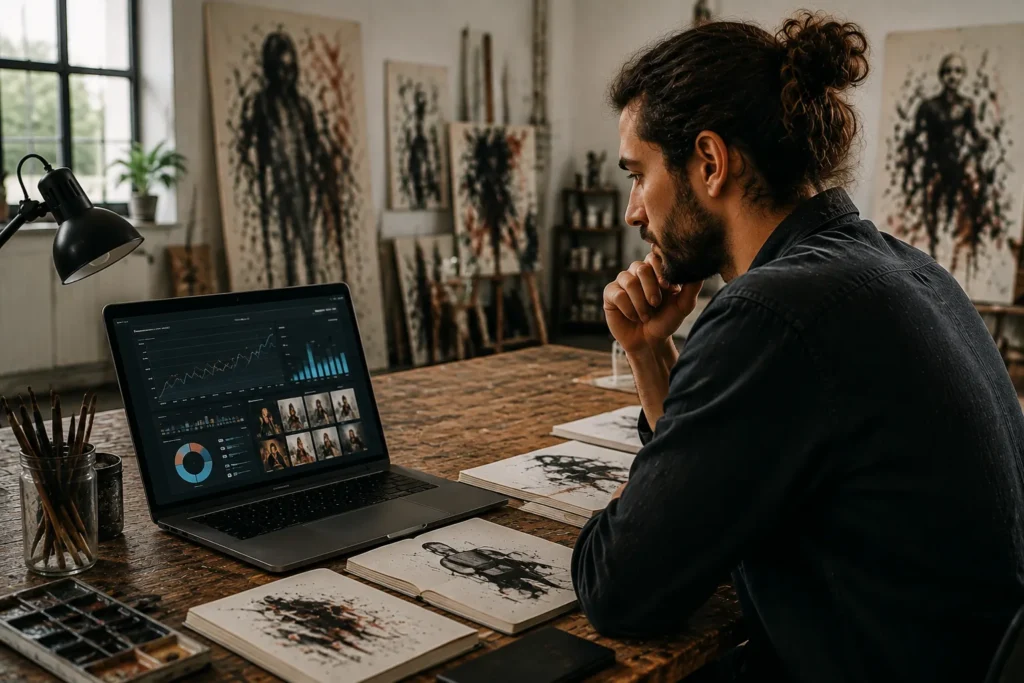
After the exhibition ends, your content keeps working. Every photo, video, and post you publish becomes a long-term marketing asset, and those assets contribute to consistent traffic to your website over time. With each post, your audience builds steadily across every platform you use.
From what we’ve seen, the content from one exhibition can fuel your online presence for months after closing night.
And as far as investments go, it’s one of the lowest-cost ones an independent artist can make. A basic website, a free email tool like Mailchimp, and a consistent posting schedule can cost next to nothing. Keep in mind, artists who track their audience get valuable insights into what worked and what to fix next time.
So, don’t wait until the exhibition opens to start posting. Your behind-the-scenes content, opening night moments, and audience reactions are all assets that work for you long after the event.
And to understand who’s engaging with that content, Google Analytics is a real game changer. It tells you who’s paying attention and how they found you.
Your Next Audience Is Already Out There
Any exhibition, big or small, can reach a global online audience, but only when the artist puts as much effort into promoting it as preparing it. Without a clear exhibition marketing plan, even the best artwork stays invisible to the wider world. So we’ve laid out a practical roadmap.
This guide covered how to find your target audience and which marketing strategies pull in collectors, buyers, and genuine followers. The rest focused on what other artists are doing right and how to build a lasting online following from one exhibition.
Ready to put all of that into practice? At No Budget Performance, our team brings the expertise to walk you through every step you need. Talk to our team today, and we’ll show you how to get your exhibition the attention it deserves.