How Performance Artists Can Build a Strong Online Presence
Performance artists can build a strong online presence with a simple website that showcases their work, upcoming performances, and booking information. Your website just needs to show people what you do and make your best work easy to find.
Not sure where to start? This guide walks you through the essentials, including web design basics and where to find inspiration for your own site.
Artist Website Design Basics: What a Performance Artist Site Needs
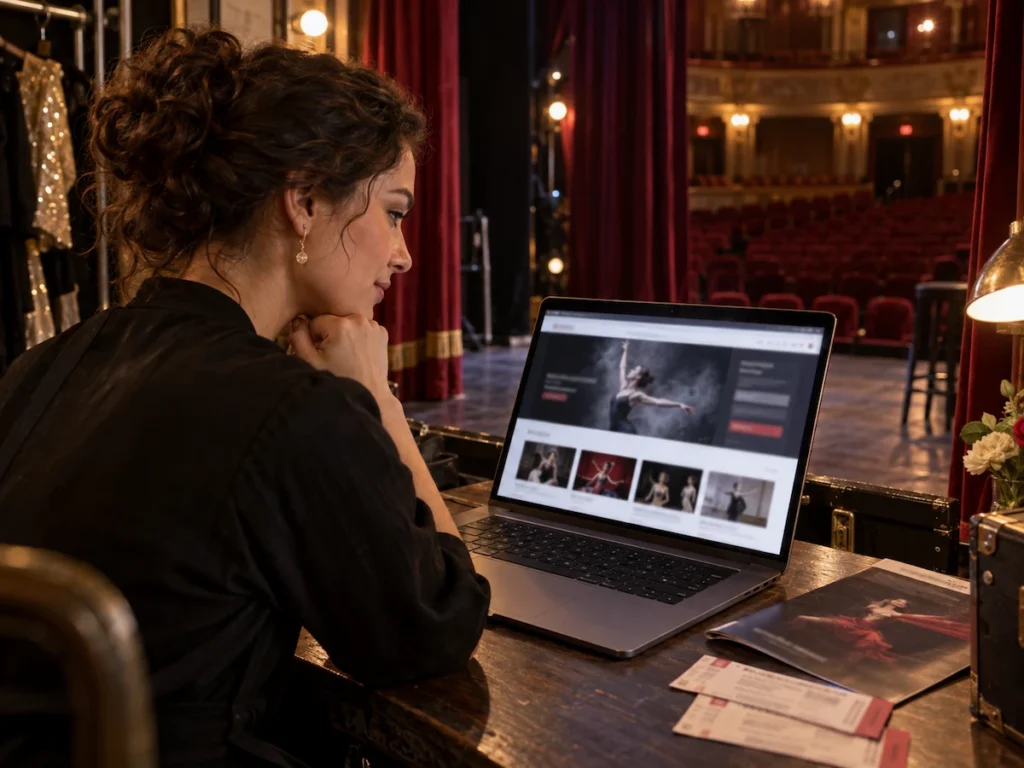
The best part about building a simple artist website is that you can handle much of the design yourself. Start with a clear layout, a portfolio that puts your work first, and typography that suits your style.
Choosing a Homepage Layout That Shows Movement and Sound
A person’s first impression of a website can form in as little as 50 milliseconds, according to research reported by Nature. That gives your homepage very little time to communicate what you do.
One way to make that clear is to lead with movement and sound rather than a static image. If your performance has a short video that captures its energy or atmosphere, put it front and centre on the homepage.
Then make the next step easy. Keep links to your upcoming shows, portfolio, and contact details close to the video so visitors can quickly find what they need.
Building a Portfolio Page With Video and Photos of Your Shows
There’s a common mistake we see among performance artists: they don’t give their past work a separate portfolio page.
Instead, they push it to the bottom of the homepage, with a small link such as “My Portfolio” or “See Who We Work With.” The problem is that many visitors never scroll far enough to find it.
Your past work deserves its own page because it’s where visitors can see what you’ve done before. That said, don’t overwhelm them with long blocks of text or every project you’ve worked on. Show your strongest work through photos and videos, with short descriptions that give each piece some context.
Highlight your accomplishments alongside the work, too, but keep the details brief. A venue, year, collaborator, award, or short description can tell visitors a lot without making them read through a wall of text.
Picking Fonts and Colours That Match Your Web Design Style
Your website’s visual style should support your performances rather than compete with them. Keep your choices consistent across the site, so visitors can focus on your work instead of the design itself.
Start with your typography. Choose one display font for headings and one plain font for body text. Two is plenty; five is a ransom note.
Then think about colour and space. Dark backgrounds can suit work built around light and shadow, while white space and wide margins can give quieter or more sculptural pieces room to breathe.
Whatever style you choose, make sure people can still read your text comfortably. The W3C recommends a minimum contrast ratio of 4.5 to 1 for normal text, so check your colours on a phone as well as a desktop.
What Makes a Strong Online Presence for Performance Artists?
A strong online presence for a performance artist needs three things: a website you control, regular updates about your work, and social media that brings people back to your site. This section breaks down how each one supports your online presence.
- A Site You Control: Your own personal website holds your portfolio, mailing list, and booking form in one place. Social platforms can change their rules, but your website remains the place you control.
- Regular Show Updates: Post new performance dates when they’re confirmed, then add past shows to your site as your work grows. This gives visitors current information and creates a record of your performances.
- Social Media That Feeds Back: Use social media to share clips, announcements, and behind-the-scenes content, then point people back to your website. A couple of useful posts each week is better than posting heavily for a few days and then disappearing.
If managing all three feels like too much, start with your website. It’s the easiest place to organise your work before you start sending people to it through social media.

Choose a Website Builder That Fits Your Performance Work
Once you know what your site needs, it’s time to choose a platform to build it on. When comparing website builders, look at the features, cost, and ease of use rather than choosing based on templates alone. This table compares a few popular options for performance artists.
| Platform | Rough cost (AUD) | Best for | Ease of use |
|---|---|---|---|
| Squarespace | $25 to $40 a month | Video-heavy work | Easiest start, strong templates |
| Wix | $18 to $35 a month | Selling prints via an online store | Flexible, a little fiddly |
| Cargo | $15 to $25 a month | Experimental layouts and grids | Steeper learning curve |
The right choice depends on what you need your site to do. If video is central to your work, prioritise a platform with strong media support. If you plan to sell work online, look for built-in ecommerce. And if you’ll manage the site yourself, choose the builder you feel comfortable updating.
Finding Creative Portfolio Examples and Inspiration From Working Artists
Great creative work rarely comes from staring at a blank page. Artists study the work around them, pick out what they like, and use those ideas to shape something of their own.
The same approach works when you’re building a performance artist website. You don’t need to study the websites of Leonardo da Vinci or Michelangelo. Their work and resources are far removed from the decisions you’re trying to make.
Instead, start with artists you admire, performers at a similar stage in their careers, and whose work you want to be compared with. Look at how their websites present performances, organise portfolios, introduce the artist, and make booking information easy to find.
You can also look beyond performance artists for ideas. Search for creative portfolio websites, then study how photographers, designers, dancers, and theatre companies organise their work. Take the parts that suit your needs and leave the rest.
The goal isn’t to copy another artist’s website. It’s to notice useful choices you might not have considered, then adapt them to your own work, audience, and style.
One practical way to do this is to collect a small reference folder. Save three to five websites you keep returning to, then note what draws you back to each one. You might like the way one presents video, another handles navigation, and another introduces the artist. Those observations give you a much stronger starting point than picking a template at random.

Build the Artist Website Your Work Deserves
As you can see, building a strong online presence doesn’t have to be complicated. You need a clear homepage, a portfolio that puts your work first, and regular updates that keep people informed.
You now have the basics to build your site. Choose a platform this week, add three pieces of your best work, and publish before the layout feels perfect. You can refine the design as your site grows.
Ready to showcase your art somewhere programmers can find it? Get in touch with No Budget Performance, and we’ll help you create a website that showcases your performances.